
Hotel lighting is no longer a decorative afterthought. It shapes guest comfort, brand identity, energy use, and operating costs.
The International Energy Agency reports that buildings remain a major source of global energy demand. The U.S. Department of Energy also identifies solid-state lighting as a key efficiency technology. In hotels, this matters across guest rooms, lobbies, restaurants, corridors, and outdoor areas. A warm bedside lamp can support relaxation. A poorly aimed downlight can create glare on polished stone. Small choices become visible experiences.
Richard Kelly, a pioneer of architectural lighting design, said, “The quality of light is more important than the quantity of light.” His principle still guides effective Hospitality Lighting. The Cornell Hotel Sustainability Benchmarking Index also shows why hotel operators increasingly track energy and environmental performance. Efficient fixtures alone are not enough. Controls, color quality, maintenance access, and local technical support deserve equal attention.
This guide examines China’s leading hospitality lighting manufacturers for hotels. It considers product reliability, optical performance, customization, certifications, project experience, and after-sales service. The selection is not a perfect scoreboard. Public data can be incomplete, and impressive showroom samples may not reflect long-term performance. That deserves honest scrutiny.
The strongest suppliers should demonstrate more than attractive luminaires. They should provide photometric files, test documentation, warranty terms, and practical installation guidance. Hotel owners should also request project references with comparable room counts and operating conditions. Good lighting must survive daily cleaning, frequent switching, changing décor, and demanding guests. That is where promises become measurable results.
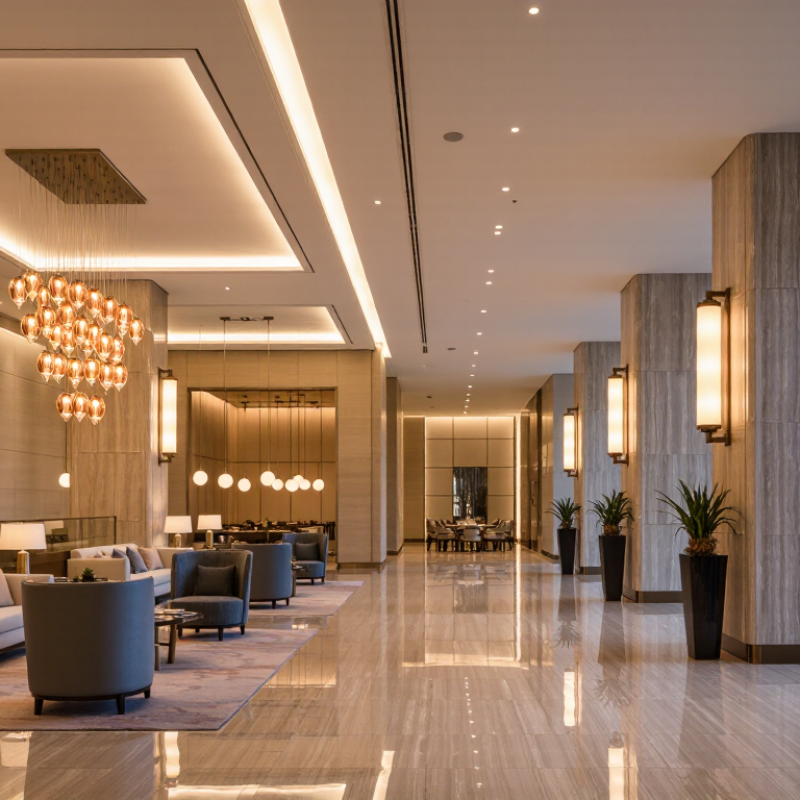
Hospitality lighting for hotels is a planned lighting system that supports guests, staff, and daily hotel operations. It combines ambient, task, and accent lighting across lobbies, guest rooms, corridors, restaurants, and wellness areas. Good design is not simply bright. It controls glare, color temperature, shadows, and visual comfort.
In a hotel lobby, warm light can make stone floors and timber details feel welcoming. A reading lamp beside the bed should illuminate pages without shining into a guest’s eyes. Corridors need consistent brightness, while stairways require clear visibility and reliable emergency planning.
Experienced lighting teams also consider maintenance access, energy use, dimming controls, and local electrical requirements. China’s hospitality lighting manufacturers often support custom layouts, but product quality must be checked through photometric data, material samples, and project references. Specifications can look excellent on paper. Reality may differ.
Tips: Test lighting at night. View samples at eye level. Check glare from mirrors and glossy surfaces. Ask for color consistency across batches. Do not overlook housekeeping needs. A beautiful fixture can still be difficult to clean. Designers sometimes overuse decorative lighting, creating visual noise and unnecessary energy demand. That choice deserves reconsideration. Flexible controls usually perform better than fixed scenes, especially when guest preferences vary. Lighting should feel natural, remain dependable, and quietly support the hotel experience.
China’s hotel lighting manufacturers increasingly focus on guest comfort, energy control, and flexible project support. Experienced factories often provide recessed downlights, decorative pendants, wall lights, and outdoor fixtures for complete hotel packages. Many offer high-CRI options above 90, helping fabrics, wood, and food appear more natural. Warm color temperatures around 2700K to 3000K suit bedrooms and lounges, while adjustable white systems support meeting rooms and service areas.
A key feature is customization. Manufacturers can modify beam angles, finishes, mounting methods, and control systems for different spaces. DALI, 0-10V, and smart control compatibility can simplify operation. Hospitality projects also need reliable testing. Ask for photometric files, electrical reports, sample approvals, and clear warranty terms. IP ratings matter near bathrooms, pools, and outdoor paths. Catalogs are useful, but they cannot replace a physical mock-up. Small differences in glare, coating color, or dimming behavior may appear only after installation.
Tips: Request a sample room test before bulk production. Check CRI, UGR, flicker, and color consistency. Confirm spare-part availability and realistic lead times. Factory inspections or independent quality checks can reveal packaging weaknesses and assembly details. One practical lesson is easy to miss: the brightest fixture is rarely the best fixture. Poorly controlled brightness can make a lobby feel cold, tiring, and less welcoming.
Hotel lighting projects need more than attractive fixtures. China’s hospitality lighting manufacturers commonly supply several major categories for hotel developments. Decorative chandeliers, pendant lights, wall lamps, and table lamps shape the guest’s first impression. Architectural downlights, spotlights, and linear systems provide controlled illumination in lobbies, corridors, and guestrooms. Task lighting supports reading, working, and mirror use. Outdoor bollards, wall lights, and landscape fixtures improve entrances and walkways.
Public areas require different performance than bedrooms. A lobby may need layered lighting with dimming scenes and comfortable color rendering. Guestrooms usually benefit from warm light, focused bedside fittings, and discreet bathroom illumination. Restaurants need accurate color rendering for food presentation. Emergency and wayfinding products also require careful coordination with local project standards. From practical project experience, early mock-ups reveal glare, shadows, and finish problems that drawings often miss. I once underestimated ceiling depth; the selected downlights then required a costly adjustment.
Tips: Request samples, photometric files, installation drawings, and test documents before approval. Check color consistency across one production batch. Confirm voltage, dimming protocol, ingress protection, and replacement parts. Ask manufacturers to explain lead times honestly, including tooling and inspection stages. Do not choose only by unit price. A cheaper fitting can create higher labor costs or uneven lighting. Also review packaging details, especially for glass and delicate decorative pieces. Small errors become visible in quiet hotel interiors.
China Top Hospitality Lighting Manufacturers for Hotels
How to Evaluate a Chinese Hospitality Lighting Supplier
Evaluating a Chinese hospitality lighting supplier requires more than comparing unit prices. Request factory photographs, production details, and recent project references. A reliable manufacturer should explain its design, sourcing, assembly, and quality inspection processes clearly. Ask for photometric files, color temperature data, glare control results, and test reports for each proposed fixture. These details help you judge whether the lighting suits guest rooms, corridors, restaurants, and outdoor areas.
Visit the factory when possible. Watch how workers check finishes, wiring, dimming systems, and packaging before shipment. Sample approval matters too. Install samples in a mock room and inspect shadows, reflections, beam angles, and color consistency at night. Small differences become obvious on polished stone or dark wood. Confirm production capacity, lead times, spare parts, and the person responsible for technical support. Written records are more dependable than friendly promises.
No supplier performs perfectly. That is worth remembering. Ask how the company handles failed tests, late components, or inconsistent batches. A trustworthy team reports problems early and proposes documented corrections. Review warranty terms, change-control procedures, and inspection responsibilities before signing a contract. Communication can still be imperfect, especially across languages and time zones. Use approved drawings, numbered samples, and written meeting notes to reduce confusion. Price matters, but stable performance and accountable service protect a hotel project far longer.
A practical hotel-lighting supplier evaluation framework based on the key factors typically used in commercial procurement: product quality, compliance, customization, delivery reliability, energy performance, and after-sales support.
The percentages represent recommended evaluation weights out of a 100-point supplier score. Product quality and compliance should receive the highest priority because hotel lighting must deliver consistent performance, safety, durability, and project compliance over the long term.
Reliable hotel lighting starts with factory discipline, not attractive catalog images. The IEA’s 2023 Energy Efficiency report estimates that lighting uses about 15% of global electricity. Efficient LED design therefore affects hotel operating costs, guest comfort, and maintenance planning.
Qualified manufacturers should provide ISO 9001-based quality controls, traceable components, and documented testing under IEC 60598. Photobiological safety should also follow IEC 62471.
Small details matter. Connector quality, driver protection, and heat management often decide long-term performance.
Project support separates capable manufacturers from ordinary suppliers. Before production, professional teams should review lighting layouts, ceiling heights, color temperatures, glare risks, and emergency requirements.
They should supply accurate IES or LDT files for DIALux and Relux calculations. Full-size mock-ups can reveal harsh shadows that drawings miss.
The UNEP Global Status Report for Buildings and Construction 2023 states that buildings consume around 30% of global energy. Hotel lighting should support this efficiency challenge without making rooms feel cold or commercial.
A dependable supplier also manages samples, inspection records, packing tests, installation guidance, and replacement parts. LM-80 and TM-21 data can support LED lifetime claims, but lifetime figures are not always equal to real hotel conditions.
No factory is perfect. Heat, dust, voltage variation, and rushed installation can reduce actual performance.
Clear warranty terms and responsive site assistance make the difference. Manufacturers should document every change, even minor driver substitutions.
That discipline protects the project after the showroom lights are switched off.
It is a planned system for guest comfort, staff work, and daily operations. It combines ambient, task, and accent lighting in key areas.
Warm light can make stone floors and timber details feel welcoming. Avoid excessive brightness, harsh glare, and decorative clutter.
A reading lamp should light the pages without shining into the guest’s eyes. Test it while sitting at bed level.
Corridors need consistent brightness for easy movement. Stairways require clear visibility and dependable emergency planning.
Install samples in a mock room and inspect them at night. Check shadows, beam angles, reflections, and color consistency.
Request photometric files, color temperature data, glare results, and relevant test reports. Paper specifications can still differ from reality.
Observe finish checks, wiring inspections, dimming tests, and packaging procedures. Also confirm production capacity, lead times, spare parts, and technical support.
Use approved drawings, numbered samples, and written meeting notes. Communication may remain imperfect across languages and time zones.
Not always. Stable performance, maintenance access, and accountable service can protect the project longer. A cheap fixture may become expensive later.
Designers sometimes overuse decorative fixtures, creating visual noise and extra energy demand. Flexible controls usually serve varied guest preferences better than fixed scenes.
This guide explores Hospitality Lighting for hotels, focusing on how well-designed illumination improves guest comfort, supports visual identity, and enhances the function of spaces such as lobbies, guest rooms, restaurants, corridors, and outdoor areas. It introduces the key strengths of China’s hotel lighting manufacturers, including flexible customization, broad production capabilities, competitive project coordination, and the ability to develop solutions for different architectural styles and operating needs.
The article also reviews major product categories, such as decorative fixtures, architectural lighting, task lighting, smart control systems, and energy-efficient solutions. It explains how to evaluate a Chinese supplier by examining design expertise, manufacturing capacity, quality control, certifications, communication, delivery reliability, and after-sales support. In addition, it outlines important manufacturing standards and project services, including lighting calculations, sample development, technical documentation, installation guidance, and maintenance assistance, helping hotel developers choose dependable solutions for complete lighting projects.