
Selecting the right lighting partner can influence a hotel’s atmosphere, energy use, and operating costs. In 2026, hospitality projects demand more than attractive fixtures. They need reliable performance, responsive service, and designs that support memorable guest experiences.
This guide explores leading Hotel Lighting Wholesale suppliers worldwide, including manufacturers, distributors, and specialized project partners. It considers practical factors such as product quality, photometric data, color rendering, color temperature, dimming systems, warranty terms, minimum order quantities, and delivery capabilities. A warm 2700K bedside lamp may create comfort, while a 4000K corridor fixture can improve visual clarity. Small details matter.
Real project experience often reveals what product catalogs hide. Sample testing, mock-up rooms, and installation feedback can expose glare, uneven illumination, or confusing controls. Supplier claims should be checked against certifications, test reports, factory capacity, and after-sales records. Local electrical requirements also deserve careful review, because global availability does not guarantee project suitability.
Not every popular supplier fits every hotel. Boutique properties may prioritize customization, while large resorts may need stable production and standardized replacement parts. Some companies offer excellent designs but weak communication. Others respond quickly but provide limited technical documentation. That is worth questioning.
The following overview presents a balanced starting point for comparing worldwide suppliers in 2026. It does not replace professional lighting calculations or site-specific evaluation. Buyers should verify current pricing, compliance, lead times, and sample performance before signing contracts. Good lighting begins with informed testing, not attractive promises.
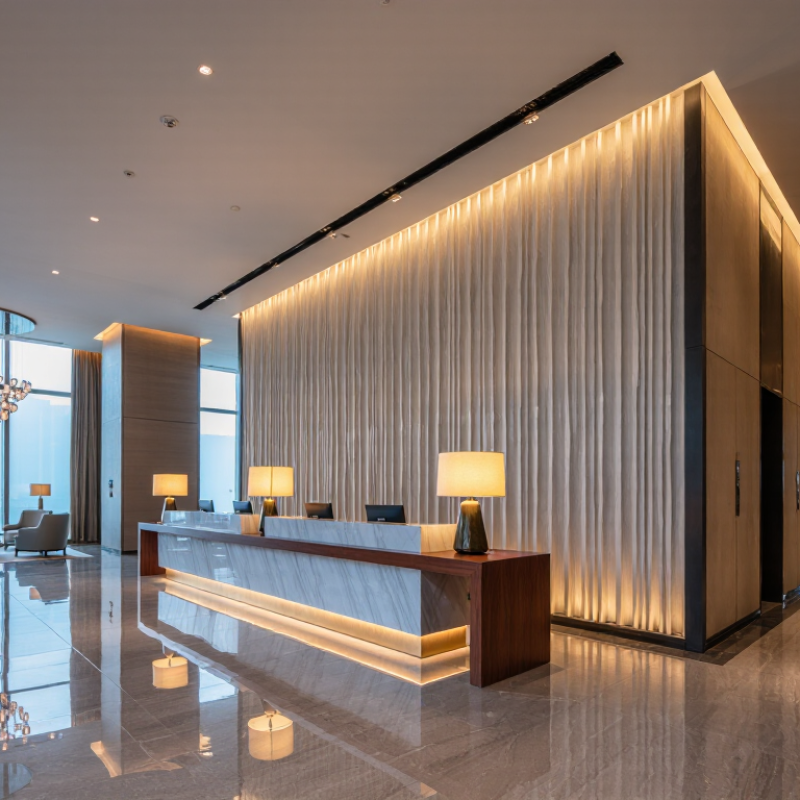
In 2026, hotel lighting wholesale suppliers provide more than fixtures and price lists. Experienced suppliers support lighting plans, photometric files, samples, and installation guidance. They help hotels select wall lights, pendant fixtures, bedside lamps, and outdoor systems for different guest areas. Good suppliers also explain beam angles, color temperature, glare control, and energy performance in practical terms.
Many suppliers now offer tunable white lighting, occupancy sensors, dimming systems, and smart control compatibility. These features can improve comfort in guest rooms, corridors, restaurants, and meeting spaces. However, not every smart function deserves its cost. A supplier should show measurable benefits, maintenance needs, and expected energy savings. Reliable documentation matters too, including safety testing, material information, warranty terms, replacement procedures, and delivery schedules. Small details often affect a hotel opening.
Tips: Request physical samples before placing a large order. Test light beside wood, stone, fabric, and painted walls. Ask for a complete spare-parts plan. Confirm lead times in writing, especially for customized finishes. Check whether local technicians can service the control system. A lower purchase price may become expensive when replacement parts are unavailable. Also, review lighting performance at night, not only in a bright showroom. That step is easy to miss.
Request completed hotel references, installation photos, photometric files, and physical samples. Factory images alone are not enough. Check whether the examples resemble your hotel’s scale and design.
Confirm color consistency, lumen maintenance, dimming compatibility, emergency options, and suitable IP ratings. Ask for laboratory test reports and clear warranty terms. Small technical gaps can become expensive later.
Build a small sample room first. Test bedside reading lights at night, not only in bright showrooms. Measure mirror glare and inspect finishes under warm light. I might trust attractive samples too quickly.
Review humidity protection for bathrooms and suitable IP ratings. Look for harsh shadows in corridors and uncomfortable reflections near mirrors. Walk through the spaces after installation. Drawings cannot show everything.
Compare at least three suppliers using the same checklist. Review prices, technical files, samples, warranties, lead times, and replacement parts. The cheapest quotation may hide weak service. That mistake is easy to make.
Different regions offer different strengths. Some support scalable custom production and decorative fixtures. Others provide refined finishing, strong documentation, or shorter regional delivery routes. No region is perfect. Match the source to your design, budget, and installation conditions.
Inspect metal, glass, wood, and surface-finish samples carefully. Confirm electrical ratings, fire-safety documentation, assembly instructions, and replacement-part availability. Workshop quality can vary. Patience is necessary.
Request a written schedule for prototypes, approvals, production, packaging, and shipping. Ask how inspections and damaged-part replacements are handled. Check communication across languages and time zones. A delayed component can disrupt the opening.
In 2026, Hotel Lighting Wholesale suppliers provide a wide range of solutions for guest rooms, lobbies, restaurants, corridors, outdoor areas, and other hospitality spaces. Their offerings may include decorative fixtures, architectural lighting, energy-efficient LEDs, smart controls, emergency lighting, and customized products tailored to a hotel’s design and operational needs. When evaluating suppliers, hotel buyers should review product quality, certifications, production capacity, customization options, delivery reliability, warranty terms, communication, and after-sales support.
Leading sourcing regions may differ in manufacturing strengths, pricing, logistics, and design capabilities, so buyers should compare suppliers based on their project location and requirements. Important product categories include chandeliers, pendant lights, wall lamps, table lamps, recessed fixtures, track lighting, landscape lighting, and bathroom solutions. The best supplier should offer consistent quality, transparent pricing, flexible order quantities, dependable lead times, and technical assistance. By matching supplier capabilities with the hotel’s style, budget, performance standards, and installation schedule, project teams can achieve attractive, durable, and efficient lighting results.